

Smart Beverage Station Ideas for Easy Hosting at Home

Beverage stations are becoming a smart addition to home renovations because they give drinks, appliances, and glassware their own space. Without one, coffee makers, mugs, bottles, and barware can crowd counters and make everyday routines or hosting feel more scattered than they need to.
At Sweeten, we’ve seen homeowners work these spaces into their homes in ways that feel both useful and natural. That’s why we’re sharing ideas for dry bars, coffee nooks, and wine fridges to help you see where a place for your drinks can fit best.
Key points
- Dry bars can make hosting easier by giving bottles, glassware, and serving essentials a dedicated spot near where guests gather.
- Coffee nooks can help mornings run smoother by keeping mugs, machines, and supplies together without taking over the main counter.
- Wine fridges can keep drinks close at hand and free up room in the main refrigerator when built into kitchens, under-stair spaces, or custom storage.
Where to put a dry bar to make hosting easier at home
A dry bar gives bottles, glassware, and mixers a dedicated spot, which can take some pressure off the kitchen when entertaining guests. It also opens up more placement options, since it can work near a dining area, in a living room corner, or inside a tucked-away niche that would otherwise go unused.
These homes show how flexible that setup can be:
Put a dry bar beside the pool table

(Above) Dan’s remodeled living room with a dry bar for drinks behind the pool table
Dan’s apartment in Greenwich Village, Manhattan, was designed around entertaining. After a corner closet came out, that awkward niche turned into a built-in dry bar beside the pool table, so drinks stayed close to the action.
Add a serving bar near the dining area
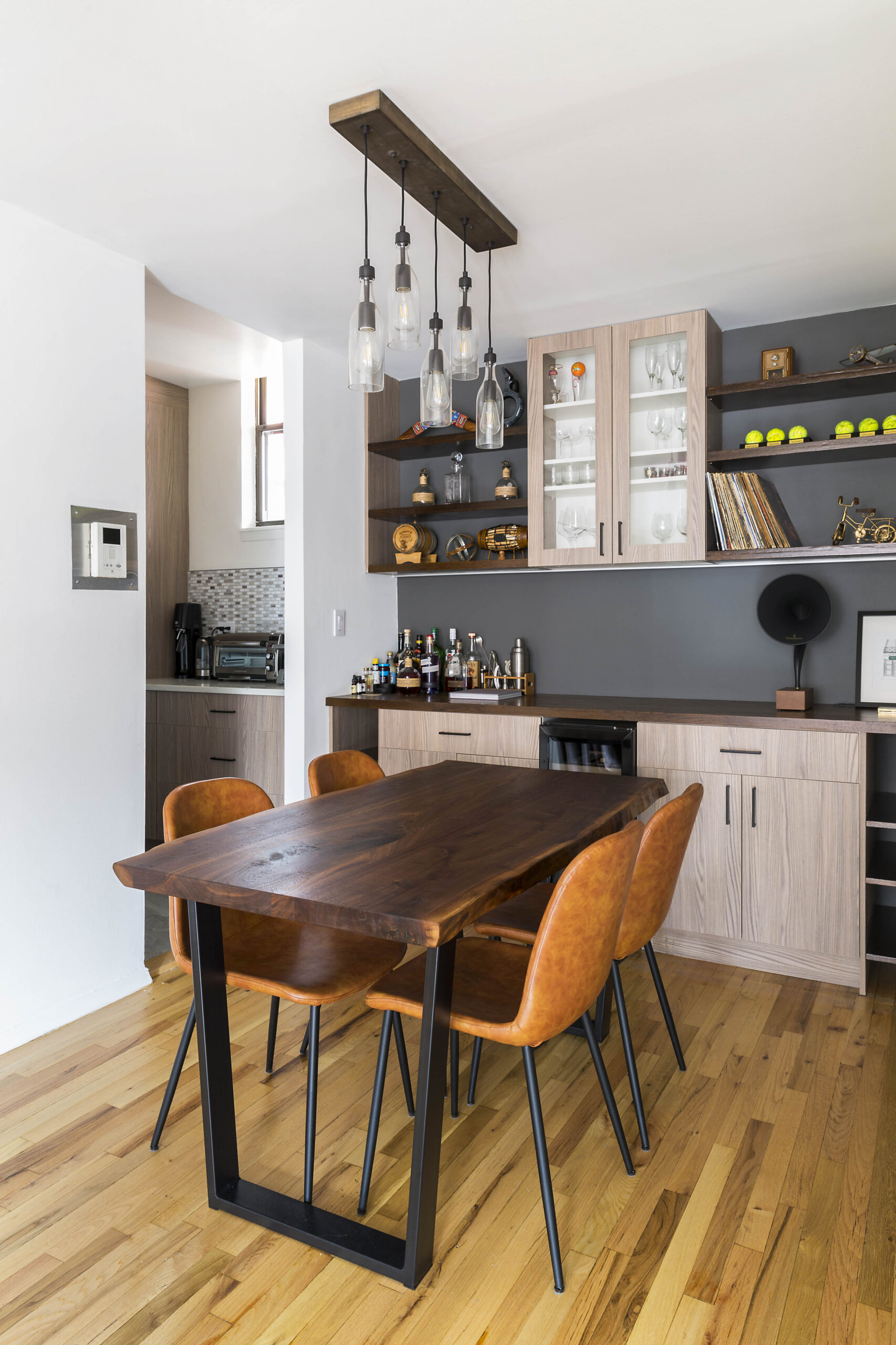
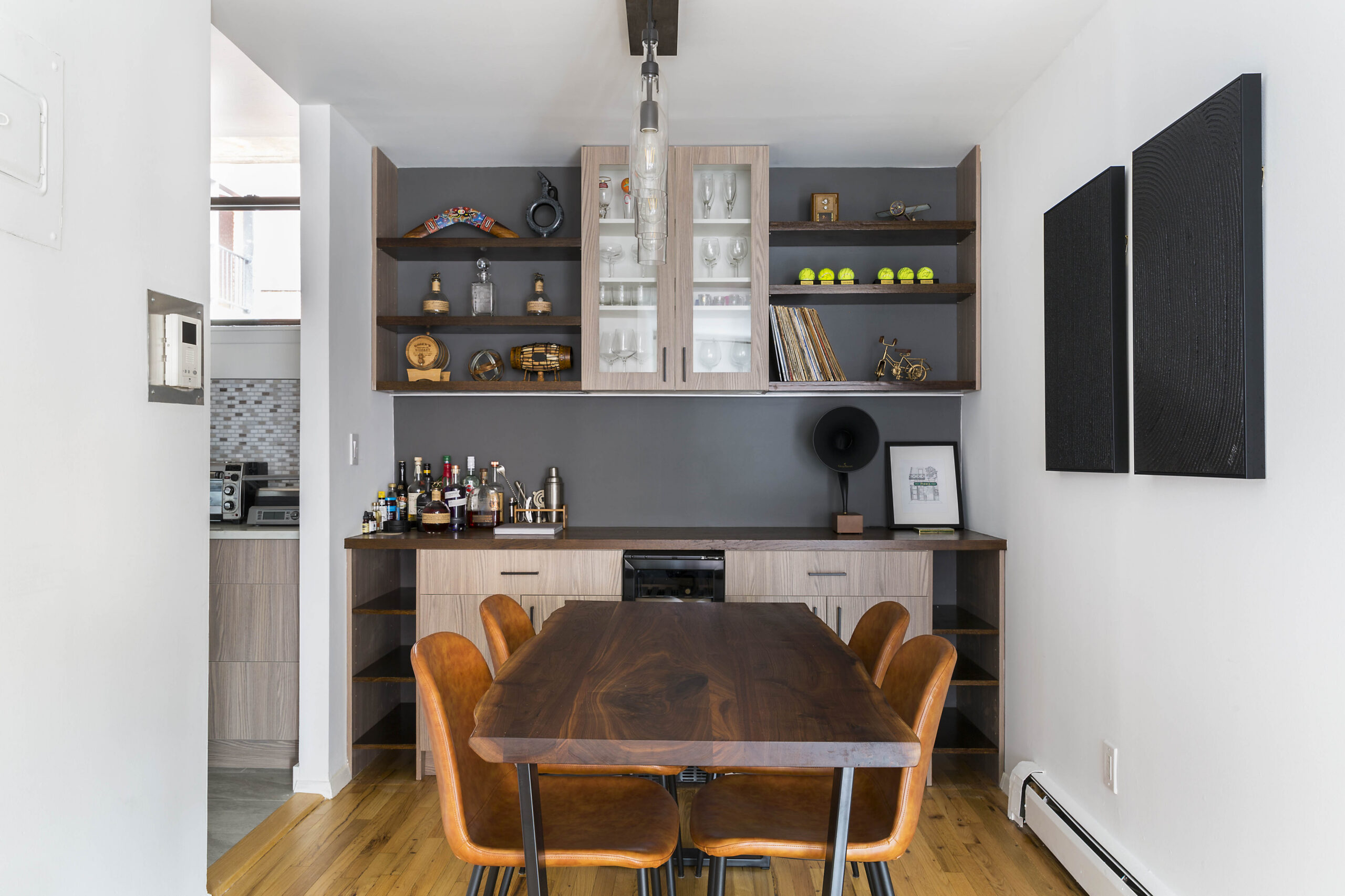
(Above) Emily’s Manhattan apartment renovation featuring wooden table, brown chairs, and built-in bar
For Emily in Manhattan’s Nolita neighborhood, the smart move was repurposing two dining room closets instead of carving out new square footage. Their built-in bar sits beside the dining area and pairs open shelving with a wine cooler, which makes it an easy serving spot when guests gather nearby.
Turn the space under the stairs into a bar

(Above) A homeowner’s renovated home with dry bar beneath the stairs filled with wine bottles and other drinks
In an apartment on the Upper West Side of Manhattan, the homeowners turned the closet beneath the stairs into something much more useful. The story does not identify the couple by name, but it does show how that former storage spot became a bar-topped wine nook that also doubles as a breakfast bar off the galley kitchen.
Keep a dry bar close to the kitchen

(Above) Katie’s renovated kitchen with a dry bar next to her fridge
In Williamsburg, Brooklyn, Katie and Elliot kept the dry bar close to the kitchen so it could support the way they host. Their renovation opened up the kitchen island and refreshed the bar area, making it easier to pour a drink while staying part of the cooking and conversation.
Where to put a coffee nook to make mornings run smoother
A coffee nook does more than hold a machine. It can gather mugs, beans, and small appliances into one reliable spot, which helps the kitchen feel calmer once the morning rush starts. The best ones also work with the layout instead of fighting it, whether they hide behind a cabinet door or claim a corner that was not doing much before.
Here are a few ways renovators made that idea work:
Hide the coffee setup in an appliance garage

(Above) Romuald’s kitchen with an appliance garage housing a coffee machine and toaster
In East Elmhurst, New York City, Romuald and his wife wanted a kitchen that worked harder without looking busier. Their contractor built an appliance garage with outlets in the back to hold the toaster and coffeemaker, so everything stays ready to use but can be closed away when the counters need to look clear.
Set up a coffee station in a corner pantry
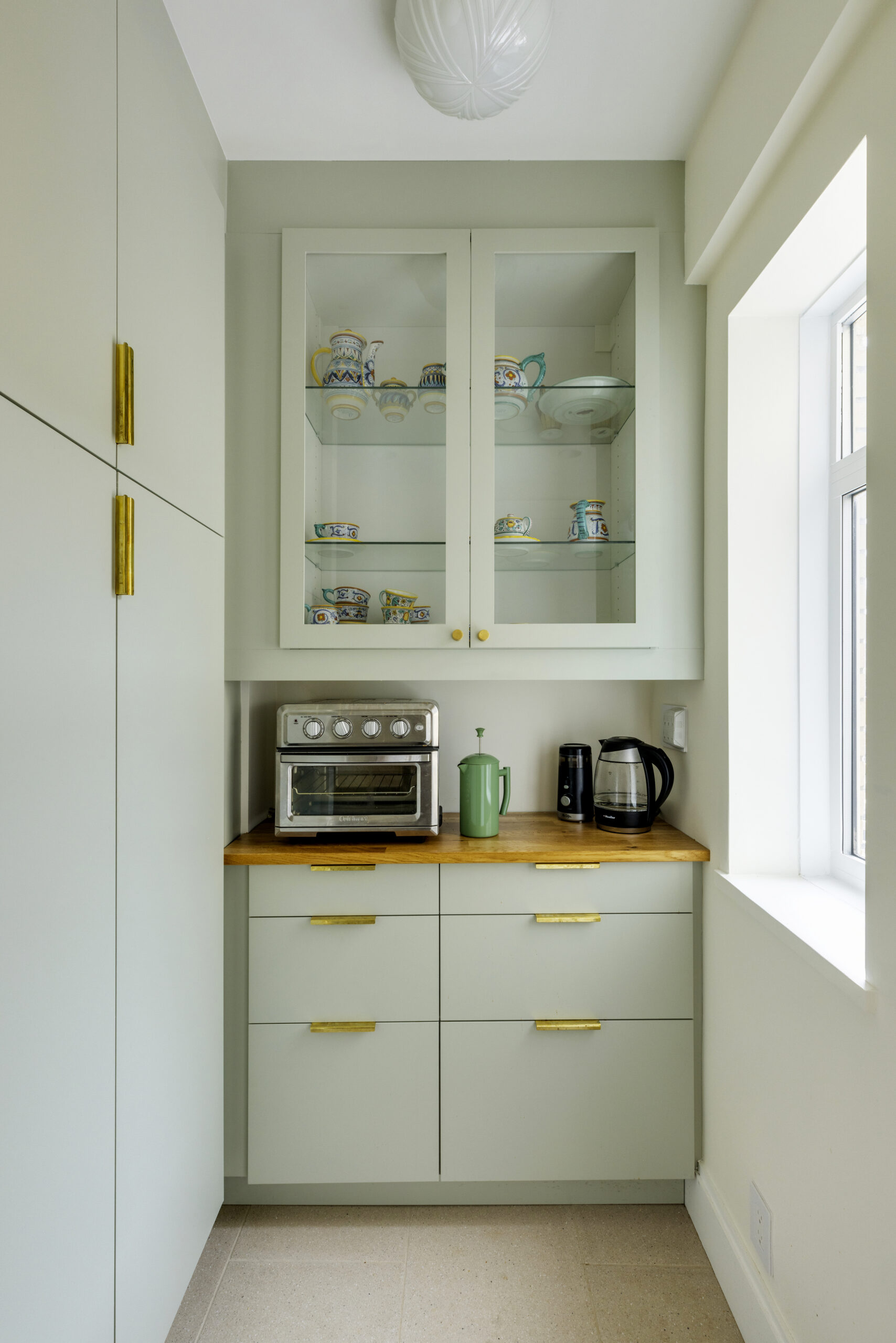
(Above) Jan’s new mint green kitchen featuring a pantry that serves as a coffee nook
Jan Eliasberg, renovating on Manhattan’s Upper West Side, gained extra storage by carving a large pantry out of previously wasted space. The finished pantry also reads as a compact coffee station, with mint cabinets, glass uppers, brass pulls, and a wood counter shown in the after photos.
Create a coffee spot within the kitchen
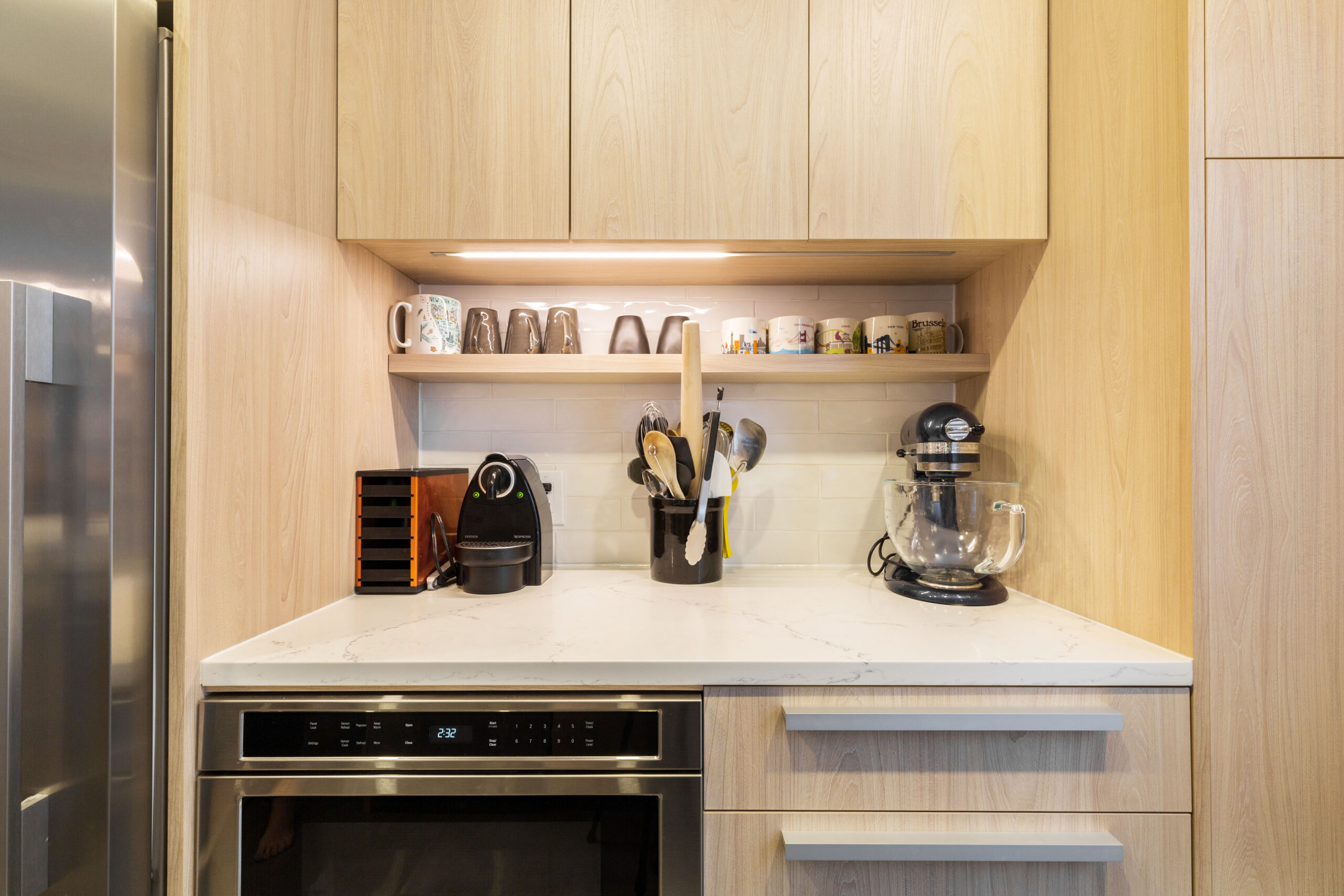
(Above) Lindsay’s remodeled kitchen with a dedicated counter and shelves for a coffee bar
In Ditmas Park, Brooklyn, Lindsay and Roger kept their coffee setup simple and close to the main work zone. Along with taller pantry storage and a new island, they added a small counter and shelves that function as a coffee bar without needing a separate alcove.
Where to put a wine fridge to keep drinks close at hand
A wine fridge can earn its place when the main refrigerator is already doing enough. It gives bottles and cold drinks a dedicated home, and some of the best placements take advantage of spots that might otherwise sit awkwardly empty.
These homes show three very different ways to fit one in:
Fit a wine fridge into the space under stairs

(Above) Alicia’s renovated apartment showing a wine fridge built underneath the stairs
In a Park Slope brownstone in Brooklyn, Alicia and Ed found an unexpected opening beneath the stairs. After testing the cavity behind the drywall, they fit in a 36-bottle dual-zone wine fridge and finished the surrounding wall with chalkboard paint.
Work a wine fridge into the kitchen layout

(Above) Amanda’s kitchen with a wine fridge containing several bottles of wine
Amanda and her husband landed at the Clinton Hill Co-ops in Brooklyn after beginning their search elsewhere in the borough. In their kitchen, they added a wine fridge next to the dishwasher, which kept beverage storage in the main cabinet run without needing a separate bar zone.
Hide a wine fridge inside custom built-ins

(Above) Melissa’s renovated apartment with a built-in wine fridge inside a wooden cabinet
Melissa, a longtime renter turned buyer on Manhattan’s Upper West Side, folded her beverage storage into a wall of built-ins. In the far corner of the living room, the millwork hides a bar and wine fridge below open shelving, so the setup stays close by without putting everything on display.
Frequently asked questions
What is a beverage station?
A beverage station is a dedicated area for making, serving, and storing drinks. It usually brings together items like coffee makers, mugs, glassware, bottles, or a beverage fridge so everything is easier to use in one place.
What is a dry bar?
A dry bar is a beverage station without a sink or running water. It typically includes counter space and storage for bottles, glassware, coffee supplies, or mixers, which makes it a flexible setup for dining areas, living spaces, or spots near the kitchen.
What’s the difference between a dry bar and wet bar?
The difference between a dry bar and wet bar is that a wet bar has a sink while a dry bar does not. That means a wet bar can handle rinsing and water access more easily, while a dry bar is often simpler to fit into more parts of the home.
How do I organize a beverage station?
Many homeowners organize a beverage station by grouping drinks, tools, and everyday essentials by how they use them. Keeping mugs, glasses, bottles, pods, beans, and openers close together can make the setup feel cleaner and easier to keep up with.
{“@context”:”https:\/\/schema.org”,”@type”:”FAQPage”,”mainEntity”:[{“@type”:”Question”,”name”:”What is a beverage station?”,”acceptedAnswer”:{“@type”:”Answer”,”text”:”
A beverage station is a dedicated area for making, serving, and storing drinks. It usually brings together items like coffee makers, mugs, glassware, bottles, or a beverage fridge so everything is easier to use in one place.”}},{“@type”:”Question”,”name”:”What is a dry bar?”,”acceptedAnswer”:{“@type”:”Answer”,”text”:”
A dry bar is a beverage station without a sink or running water. It typically includes counter space and storage for bottles, glassware, coffee supplies, or mixers, which makes it a flexible setup for dining areas, living spaces, or spots near the kitchen.”}},{“@type”:”Question”,”name”:”What’s the difference between a dry bar and wet bar?”,”acceptedAnswer”:{“@type”:”Answer”,”text”:”
The difference between a dry bar and wet bar is that a wet bar has a sink while a dry bar does not. That means a wet bar can handle rinsing and water access more easily, while a dry bar is often simpler to fit into more parts of the home.”}},{“@type”:”Question”,”name”:”How do I organize a beverage station?”,”acceptedAnswer”:{“@type”:”Answer”,”text”:”
Many homeowners organize a beverage station by grouping drinks, tools, and everyday essentials by how they use them. Keeping mugs, glasses, bottles, pods, beans, and openers close together can make the setup feel cleaner and easier to keep up with.”}}]}
The post Smart Beverage Station Ideas for Easy Hosting at Home appeared first on Sweeten.