

Essential Bench Jigs: V-Block Stop for Planing


Get a Grip on Legs and Other Thin Parts
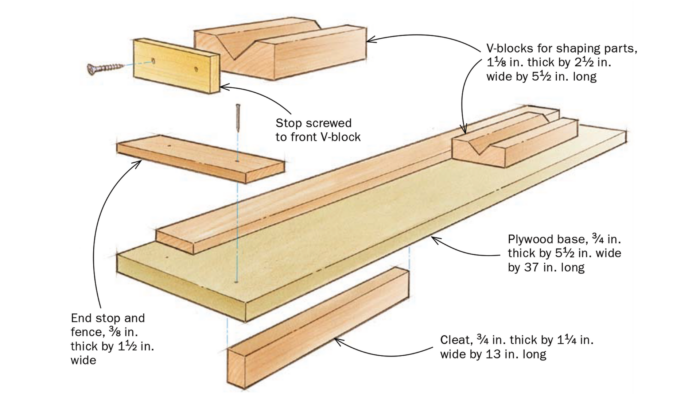
To plane long, narrow parts, which have a tendency to pivot, I use a stop that provides lateral support as well. Attach two thin strips to a plywood base at right angles and add a cleat on the bottom so it can be clamped in the vise. The stop keeps the work from pivoting, even when you skew the plane for a smoother cut. When chamfering or shaping legs, add V-blocks to the stop to support the stock at 45°.


Easy to build, easy to use. Pekovich glues and pins the thin end stop and fence to the plywood base. He also glues a cleat to the bottom of the jig, which allows it to be clamped in place. The fence prevents long parts like table legs from pivoting during planing.

V-blocks support stock at an angle. For shaping or chamfering long, narrow parts, screw a pair of beveled blocks to each end of the jig. The front block has an end stop screwed to the face to hold the stock in place while shaping.
To view the entire article, please click the View PDF button below.
Fine Woodworking Recommended Products

Bahco 6-Inch Card Scraper
The size and thickness are what matter here. A consistent performer, this Bahco scraper is found in many shops we visit.
Veritas Micro-Adjust Wheel Marking Gauge
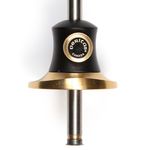
The adjuster runs through the beam from a small knob at the back end right to the cutting wheel, which moves in and out as you turn the knob. This arrangement works well but makes adjustments a two-handed operation, requiring a little more effort.

Double Sided Tape
A thin woven core makes XFasten tape strong yet not too thick (0.008 in.), and helps it hold powerfully without being difficult to peel off.
Sign up for eletters today and get the latest techniques and how-to from Fine Woodworking, plus special offers.
Download FREE PDF
when you enter your email address below.
View PDF